2026 EKO Tribute Award for Leadership
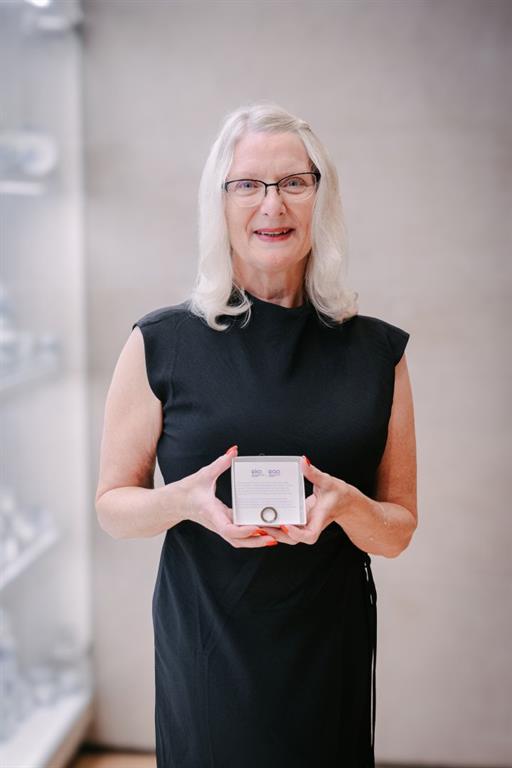 When Patty Douglas began working on her PhD, focusing on care and autism, she felt that there was something wrong with the way we talked about youth with autism. She had been working as a special education teacher and one of her sons lived with autism. As she conducted her research, she looked back in time to see how autism was discussed throughout history and saw that the same things were being said over and over again.
The discussion always seemed to centre on autistic young people as a "problem" that needed to be "fixed." Furthermore, there was stigma, confusion and misunderstanding among different parts of the community, on top of difficulty accessing care. After she completed her PhD, Douglas was working as a postdoctoral fellow and began to ask herself whether this "deficit" model could be turned around. Perhaps there was another way to look at it. It could be generative, affirming. Instead of problematizing, the narrative about autism could actually elevate and be centred around the actual people with autism.
This is how the Re*Storying Autism Project was born.
It started as a small storytelling project that brought together groups that normally don't come together. Douglas invited autistic young people, teachers, family members, decision-makers, researchers, and artists, to share stories. It helped to get beyond some of the tensions that you tend to see in the media - the beleaguered parents, the overworked clinician. While there is truth in those tensions, by bringing people together in a room to tell their stories, everyone could appreciate one another across their various positions and understand that they all had the same goals: acceptance, support, affirming the different ways of being human. And this changed the way people looked at how support could be offered, and how learning opportunities could be made more accessible.
Through storytelling, people could share their authentic experiences without judgement and feel heard.
As she continued her work, she started to realize that it was mostly white boys that were getting the diagnosis, and began to work to decolonize her research, taking a more intersectional approach that opened up space for women, non-binary, Black, Indigenous and other marginalized autistic people.
In the years since, she has facilitated projects around the world from Canada to England to Aotearoa (New Zealand). Today, the Re*Storying Autism Project is a broad umbrella for arts-based projects that tell the stories of living and working with autism. There are more than 150 stories collected in a variety of media: video, prose, poetry, photography and even crochet!
Douglas partners with organizations and school boards, and using these stories, helps them better understand and design for clients and students.
The Re*Storying Autism website has information on both research and resources and includes many examples of the stories told from these multiple perspectives. Douglas says she regularly gets inquiries from around the world, and even expressions of gratitude from those who have appreciated that they are not alone.
Those stories change people. They allow people to reflect and relate, feel, imagine, hope, all the things you do as a human being. When you bring the groups together, to honour somebody else's story is a powerful thing to witness. Story brings us together as human beings. When you can witness what it means to be a mom or to be a young autistic person or to be a teacher, it builds empathy and connection rather than divisiveness. And it's very powerful.