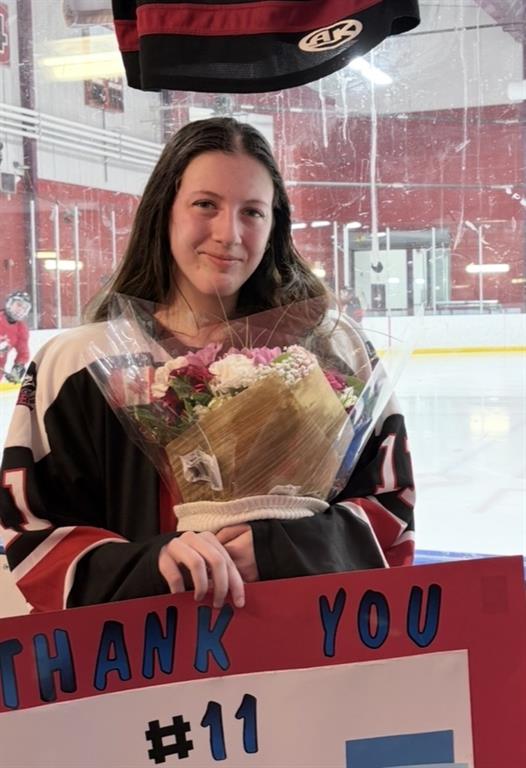
 Well into an interview with Chelsea Kulawic, she gets to talking about her part-time job and volunteer work at Albright Manor Nursing Home in her hometown of Beamsville, Ontario.
Her job there is to serve lunch and dinner to the residents. But in doing that work, she has spent time with residents who are experiencing various stages of dementia and other neurological challenges. She’s gotten to know them and interact with them. And that contact has sparked something important.
“I get sensitive when I see people struggle. It makes me want to help them. I’m not going to let someone struggle if they need help.”
That profound sense of care is in Chelsea’s soul. It drives everything she does.
She says her dad, Michael, has had a big influence on her that way.
“He’s in the insurance industry, where he investigates fraud. Based on what he’s seen, he’s always encouraged me to do the right thing. Don’t go halfway.”
As a superb athlete (hockey and soccer are her specialities) and student at West Niagara Secondary School, her teachers praise Chelsea, who’s 17, for her impressive leadership skills as captain, especially in her ability to help all team members feel valued and included, especially the younger players who are new.
As a daughter of Louise, she has been moved by her mom’s experience with lupus and her grandparents’ dementia. As a sister of Kimberlyn, a labour and delivery nurse, Chelsea has seen how to care for people with skill and compassion.
Chelsea’s own challenges have also influenced her. She can’t hear in her left ear. Repeated infections left scar tissue that has blocked the ear canal. That challenge has bolstered her feeling for others who have difficulties.
While her care for people is notable, it comes with a companion quality: she’s curious.
“I’m interested in how and why things happen,” says Chelsea, who conducted formal research in high school on health and has earned certification on how to work with elderly patients who have dementia and related cognitive conditions. As an athlete, her own experience with concussions has shown her how difficult it can be to recover from brain injuries.
She’s now about to take a huge step forward in applying that curiosity, all with the goal of enabling her to provide care.
Chelsea is starting first year at Brock University in St. Catharines, Ontario this September. Her major: neurobiology.
“Getting into neuroscience can give me the knowledge and skills I need to help my mom and interact with her. She will always have lupus. I can help her more by understanding her condition. And in the seniors’ residence, I see a broad spectrum of neurological conditions. That experience has been a major motivation for me in wanting to understand what those people are experiencing and how they can be supported.”
She knows she has a long way to go, but she’s excited to get started. And she’ll do so inspired, again, by her dad.
Back to the 2026 EKO Scholars